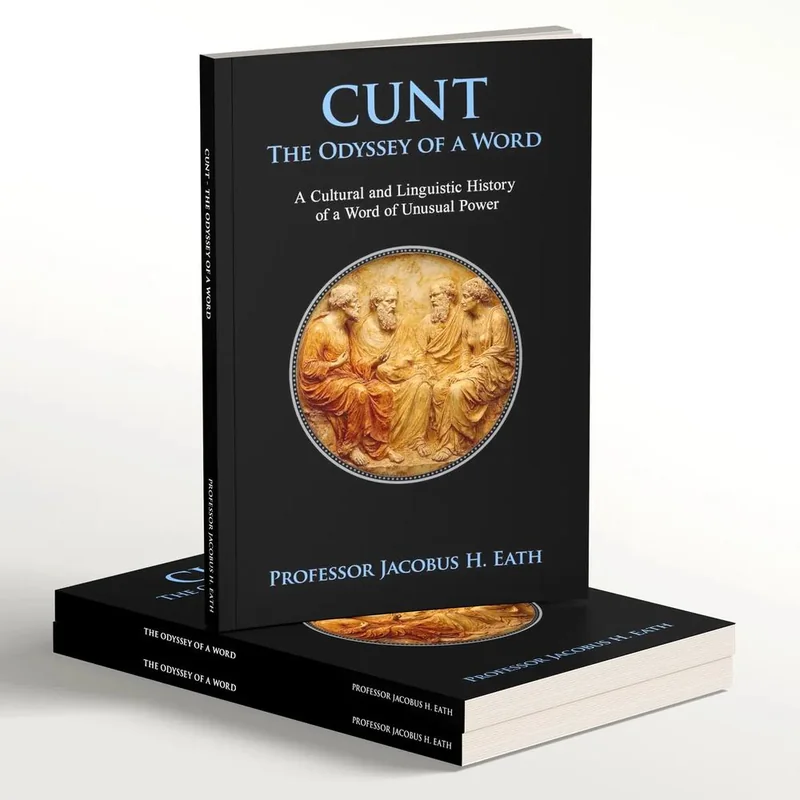
CUNT
A mock-scholarly rude word history devoted to the most notorious title in the collection.
The same word can be a joke, an insult, a taboo, a punchline or a social grenade. This page explains why the C‑word carries more force than most ordinary swear words.
The word is offensive because it is not just “rude”. It combines sexual anatomy, bodily taboo, gendered insult and social aggression. Many swear words only touch one taboo area. This one tends to drag several into the room at the same time.
That means it is rarely neutral. Even when used jokingly, it arrives with risk attached.
In British, Irish, Australian and New Zealand English, the word can be used as a general insult, sometimes even among friends in very informal contexts. In American English, it is often treated as far more gendered and more severe.
This difference matters in humour and gift-giving. A book with this title will land differently depending on the recipient and the room it is opened in.
Taboo words remain powerful partly because people avoid them. Avoidance gives them energy. Every euphemism, warning and asterisk keeps the original word alive by reminding everyone that it is still dangerous.
That is the joke at the heart of CUNT: The Odyssey of a Word: it dresses a forbidden word in the costume of a serious historical artefact.
A mock-scholarly rude word history devoted to the most notorious title in the collection.